
Information for a responsible decision
Your request gathers the initial details needed to guide proper disposal according to battery chemistry and physical condition.
Used batteries must not be discarded in regular trash. Share the battery type, quantity, condition, and location so FULGURIS can evaluate the scenario and guide the next steps.
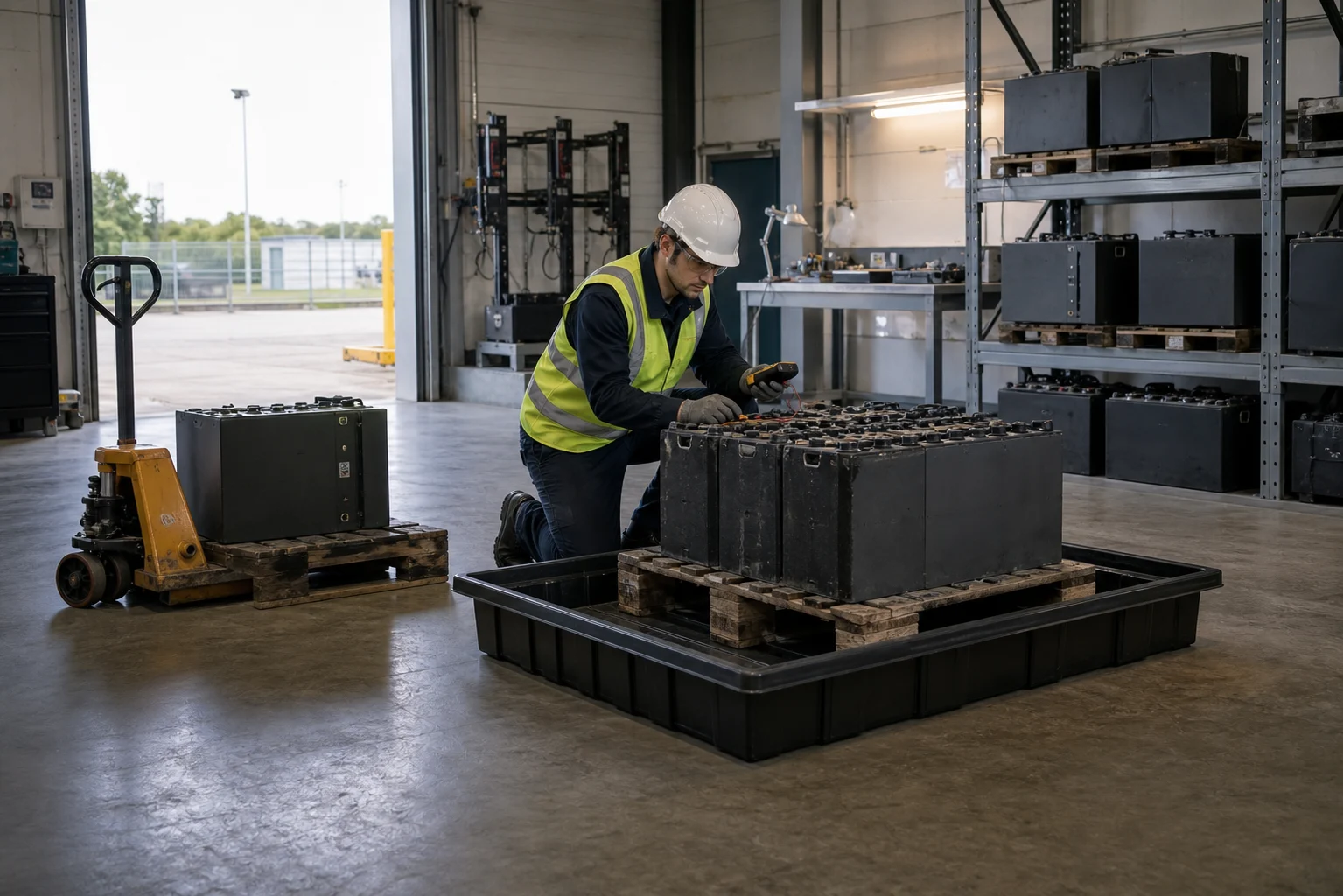
Every evaluation starts by understanding the scenario. The submitted details help our team assess options without promising unconfirmed operational terms.
Your request gathers the initial details needed to guide proper disposal according to battery chemistry and physical condition.
Application, chemistry, quantity, condition, and location help our team determine the viable next steps.
Availability, costs, timelines, and applicable environmental documents are confirmed before any drop-off or collection.
An infrastructure benchmark combining industrial scale, rooftop solar generation, rainwater harvesting, and environmental management.
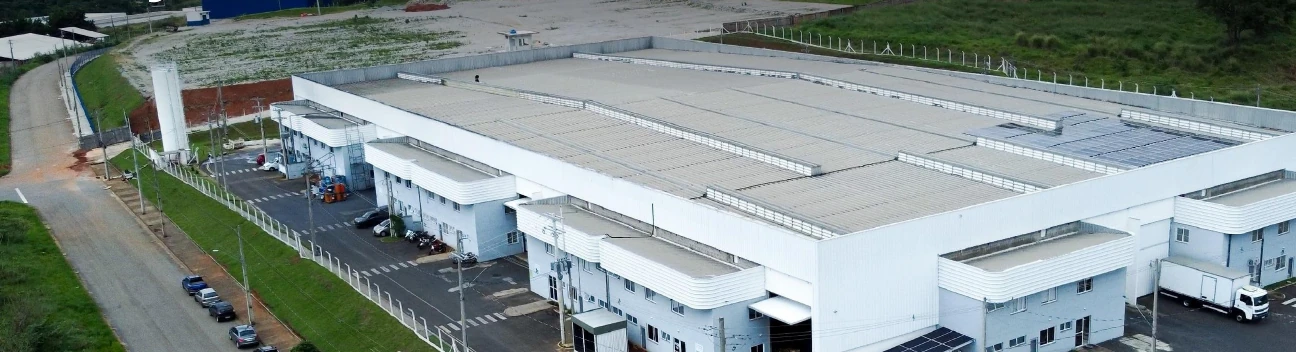
Four connected fronts form a complete cycle: receive, recover value, extend service life, and return critical materials to the supply chain.
Collection and transport of end-of-life batteries.
Multi-brand diagnostics, module recovery, and pack restoration.
Second-life stationary applications for recovered modules.
Black mass recovery and refining of critical metals.
Diagnostics and repair of electric vehicle batteries, within or outside warranty, keep packs in service longer and prevent premature recycling.
The process spans six stages, from safe sorting to obtaining battery-grade materials ready to re-enter the manufacturing chain.
Incoming batteries are separated by type, chemistry, and condition before proceeding to the appropriate treatment.
Cells undergo controlled discharge and deactivation to reduce electrical and thermal risks prior to mechanical processing.
Mechanical processing of cells yields black mass, a concentrate containing the valuable metals present in lithium batteries.
Black mass undergoes chemical dissolution to separate the metal oxides contained in the material.
Lithium, cobalt, nickel, and manganese are separated across dedicated refining stages.
Recovered metals can return to the manufacturing of new batteries and industrial products, closing the production loop.
A dedicated platform tracks inventory and monitors transport from origin to processing, turning fragmented collection into a traceable, auditable flow.
Optimized pickup routes and coordinated management of collection partners.
Real-time inventory logging and digital chain of custody.
End-to-end traceability from origin to processing facility for an auditable workflow.
Stages, collection availability, service conditions, and applicable documents depend on operational evaluation and confirmation. SINIR reports an average recycling potential of 99% for end-of-life lead-acid batteries; this figure is a sector benchmark and does not represent a measured FULGURIS metric.
Type a keyword or browse the full list. Operational terms and documentation can only be confirmed after evaluation.
Share only the information currently available. The clearer the scenario, the more objective our initial guidance will be.
Do not include tax IDs or full street addresses. Photos and documents are not requested at this stage.